When you're choosing between a circular polarizer and a conversion lens, the real question is: what's ruining your photos? If glare, reflections, and washed-out colors are the problem, a polarizer is the direct fix. If you're stuck with the wrong field of view-too narrow for interiors or too wide to bring distant subjects closer-a conversion lens gives you a new perspective. Both are listed as new items, but they solve different shooting problems.
Quick verdict: The 72mm Circular Polarizer Filter is the answer for outdoor and reflective-surface shooting. The 72mm Wide/Tele Conversion Lens is the answer when you want more framing options. Choose based on your typical subject matter.
| Product | Listed Price | Price Bar | Best For |
|---|---|---|---|
| 72mm Circular Polarizer Filter (CPL) | USD 8.79 | Reflection control | |
| 72mm Wide/Tele Conversion Lens | USD 28.99 | Perspective control |
Where each product wins
The circular polarizer wins for landscapes, waterfalls, storefront windows, and any scene where water, glass, or shiny surfaces block the subject. It deepens blue skies and greens, reduces reflections, and lets you rotate the filter to tune the effect. In this pairing, that's the polarizer's job.
The conversion lens wins when your problem is focal length. Choose the wide-angle mode for architecture, group photos, or travel scenes, and choose the telephoto mode for wildlife, sports, or distant details. You choose which of those two modes you need before you buy.
Circular Polarizer Filter (CPL)
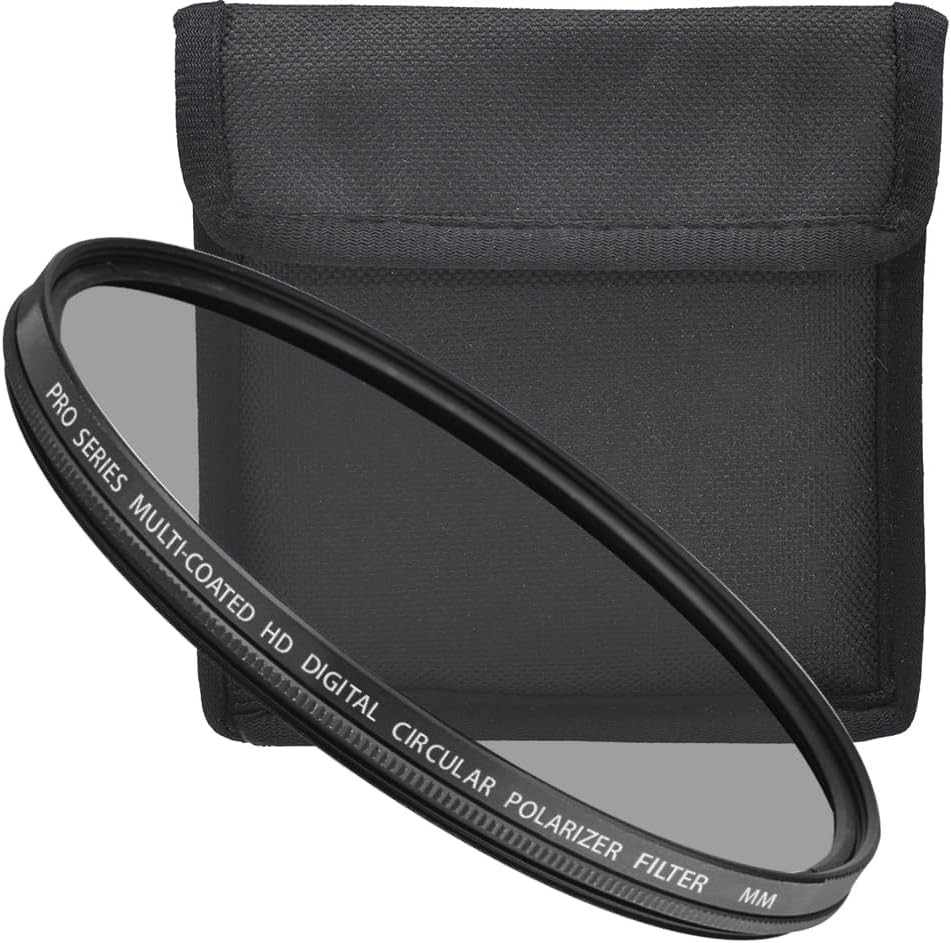
If you often shoot landscapes or reflective scenes, this polarizer gives you a direct way to reduce glare on glass and water while making colors pop. The rotating frame means you can adjust the polarization without repositioning your camera, and it threads onto lenses with a matching filter thread. The limitation is that it doesn't add magnification or widen the field of view; if your problem is distance or perspective, this filter won't fix it. You're paying for light control only, which makes it a strong choice when glare is your main concern.
Wide/Tele Conversion Lens
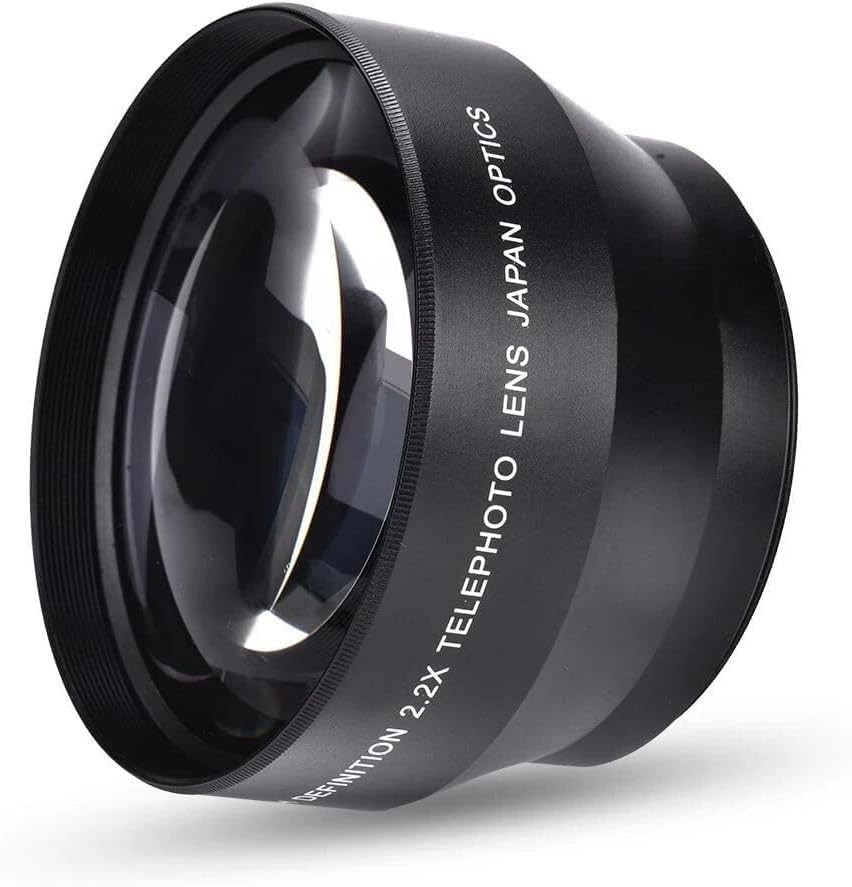
You get two framing options in one accessory: a 0.45X wide angle for interiors and group shots, or a 2X telephoto for distant subjects. The wide-angle option also includes a detachable macro lens for close-ups of small objects, which adds another practical use. At $28.99, you're paying for flexibility in framing rather than reflection control. The limitation is that it won't help with glare or color saturation; that's the polarizer's job. Pick this when your challenge is reach or perspective, not reflections.
Final choice by use case
For a straightforward glare and reflection fix, go with the circular polarizer. For a more versatile framing tool that can shoot wider or closer, go with the conversion lens. If you regularly shoot near water or in bright sun, start with the polarizer. If you keep missing the shot because you can't zoom out or in far enough, the conversion lens is the one that solves that exact problem.